Surfing for Beginners: The Ultimate Guide to Catching Your First Wave
Surfing is more than just a sport; for many, it is a lifelong passion and a way to connect deeply with nature. There is a unique thrill in harnessing the energy of the ocean and gliding across its surface. However, looking at experienced surfers effortlessly carving through waves can make the process seem intimidating. You might wonder if it is too difficult to learn or if you need to be an elite athlete to start.
The truth is that surfing is accessible to almost anyone with the right mindset, preparation, and patience. While the learning curve can be steep, the reward of standing up on your first wave is an experience you will never forget. This guide is designed to take you from a complete novice to a confident beginner. We will cover everything from choosing the right equipment to understanding ocean safety and mastering the fundamental “pop-up” technique.
Getting Started: Physical Preparation and Mindset
Before you even touch a surfboard, it is essential to assess your physical readiness. You do not need to be a marathon runner or a bodybuilder, but you do need a reasonable level of fitness. Surfing involves significant paddling, which engages your shoulders, back, and core.
Swimming Ability
The most critical prerequisite for surfing is the ability to swim. You will be in the ocean, often in moving water where your feet cannot touch the bottom. You should feel comfortable treading water and swimming at least 200 meters without stopping. If you are not confident in your swimming skills, consider taking swimming lessons in a pool before heading into the open ocean. Safety is the foundation of a good surfing experience.
The Learning Mindset
Surfing requires patience. Unlike sports where the playing field is static—like a tennis court or a soccer field—the ocean is constantly changing. Waves, tides, and wind conditions shift by the minute. You will likely fall off your board many times during your first few sessions. This is entirely normal. The key is to laugh it off, climb back on, and try again. Resilience is just as important as balance.
Choosing the Right Gear for Beginners
One of the biggest mistakes new surfers make is buying the wrong surfboard. It is tempting to buy a short, sleek, high-performance board because it looks cool, but this will make learning nearly impossible.
The Magic of the “Foamy”
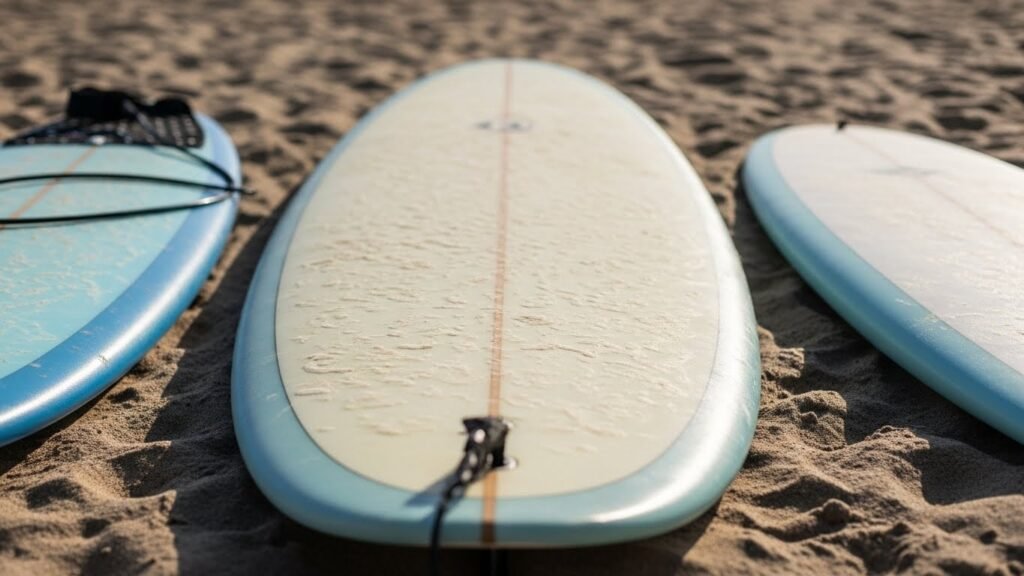
For your first few months of surfing for beginners, your best friend is the longboard, specifically a soft-top foam board.
- Buoyancy: These boards are thick and filled with foam, making them float very well. This makes paddling easier and helps you catch small, weak waves.
- Stability: A longer, wider board provides a stable platform. It wobbles less when you try to stand up.
- Safety: The soft material is forgiving if the board hits you (or someone else) when you fall.
Wetsuits and Apparel
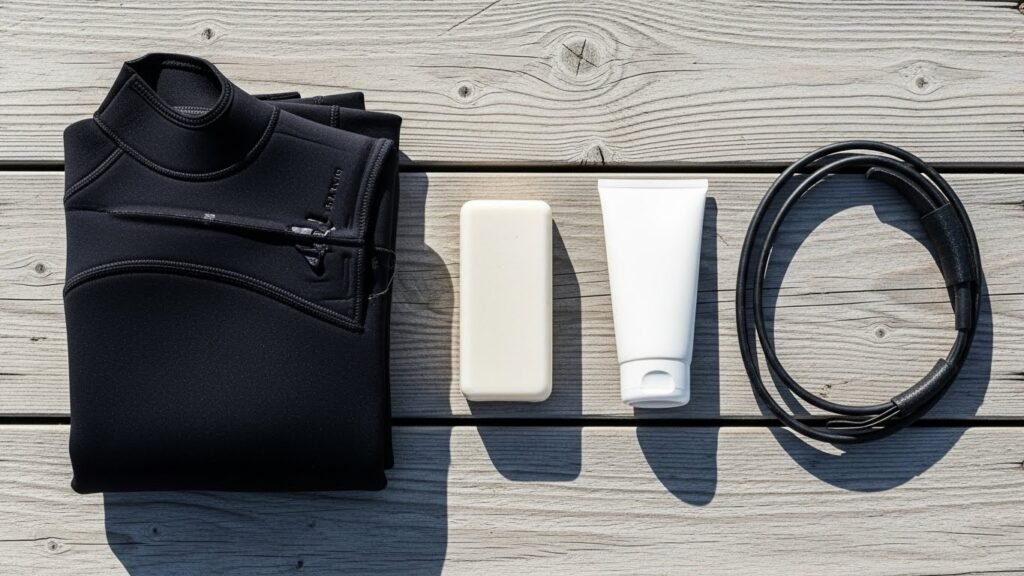
Depending on where you are surfing, you may need a wetsuit. Wetsuits keep you warm by trapping a thin layer of water against your skin. In tropical waters, a rash guard (a UV-protective shirt) and board shorts or a swimsuit are sufficient. The rash guard is essential to prevent “board rash,” a painful irritation caused by your chest rubbing against the board’s wax.
Understanding the Ocean
The ocean is powerful and unpredictable. Before paddling out, spend ten minutes watching the water from the beach. This is called “checking the surf.”
Reading the Waves
Look at where the waves are breaking. Are they breaking in a specific spot, or are they closing out (breaking all at once)? As a beginner, you want to avoid large, hollow waves. You are looking for “whitewater”—the foamy, broken waves that roll toward the shore after a wave has already broken. These provide a steady, forward push that is perfect for learning the mechanics of standing up.
Rips and Currents
Be aware of rip currents. These are channels of water flowing away from the shore. If you get caught in a rip, do not panic and do not try to swim directly against it back to the beach. Instead, swim parallel to the shore until you are out of the current, and then let the waves help push you back in. If you are ever in doubt about the conditions, ask a lifeguard. If there are no lifeguards and the water looks rough, do not go in.
The Pop-Up: Mastering the Motion
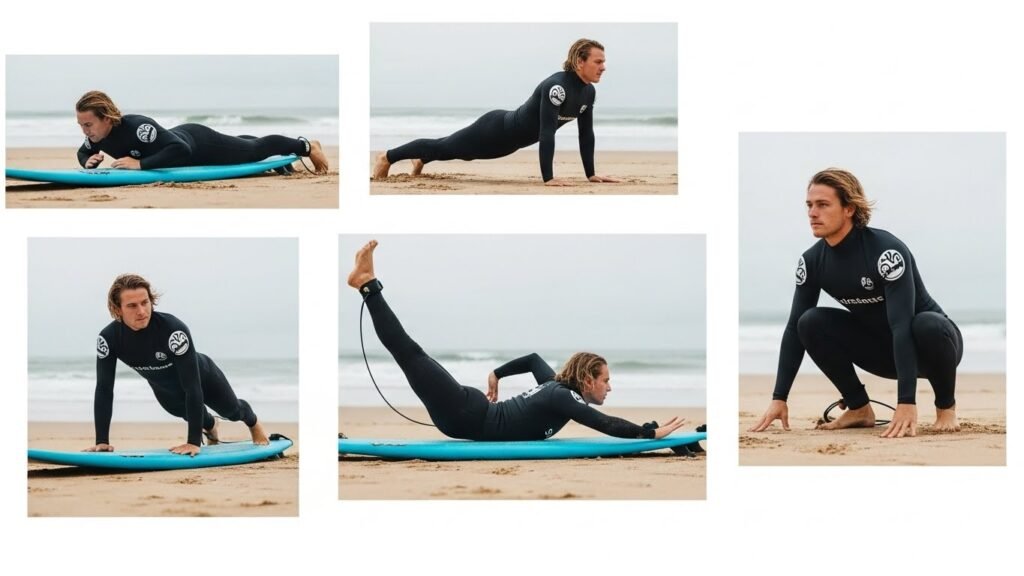
The “pop-up” is the explosive movement of going from lying on your belly to standing on your feet. It is best to practice this on dry land—on the sand or a yoga mat—before trying it in the water.
Step 1: The Prone Position
Lie down on your stomach with your body centered on the board (or mat). Your feet should be together at the tail. Place your hands flat on the deck, right next to your lower ribs, as if you are about to do a push-up. Do not grab the rails (edges) of the board, as this can make the board tip.
Step 2: The Push
Push your chest up by straightening your arms and arching your back like a cobra pose. Keep your hips and thighs on the board for a split second.
Step 3: The Sweep
In one fluid motion, bring your knees toward your chest and plant your feet under you. Your front foot should land between your hands, and your back foot should be shoulder-width apart behind it.
Step 4: The Stance
Release your hands and stand up. Keep your knees bent, your back straight, and your eyes looking forward (not down at your feet). Your body should be sideways to the beach, similar to a skateboarding or snowboarding stance.
Your First Session in the Water
Now that you have your gear and have practiced on land, it is time to get wet.
Walking Out
Walk your board out into the water until you are about waist-deep. Hold the board by the side or nose, keeping it perpendicular to the incoming waves. Never hold the board broadside (parallel) to the waves, as the water will slam the board into your body.
Catching Whitewater
Turn the board so the nose is facing the beach. Wait for a wall of whitewater to approach. When it is about 10 feet away, jump onto the board and lie on your stomach. Start paddling hard toward the beach.
The Glide
As the whitewater hits the back of your board, you will feel a surge of speed. The board will lift and move forward. Keep paddling for two or three more strokes to ensure you have momentum.
Standing Up
Once you feel steady momentum, perform the pop-up you practiced on land. Remember to keep looking forward at the beach, not down at your board. If you look down, you will likely fall. Keep your center of gravity low by bending your knees. Ride the whitewater straight toward the shore. Congratulations, you are surfing!

Surfing Etiquette: The Unwritten Rules
Surfing has a strict set of rules designed to keep everyone safe and ensure everyone gets a fair share of waves. Violating these rules is the quickest way to upset the locals.
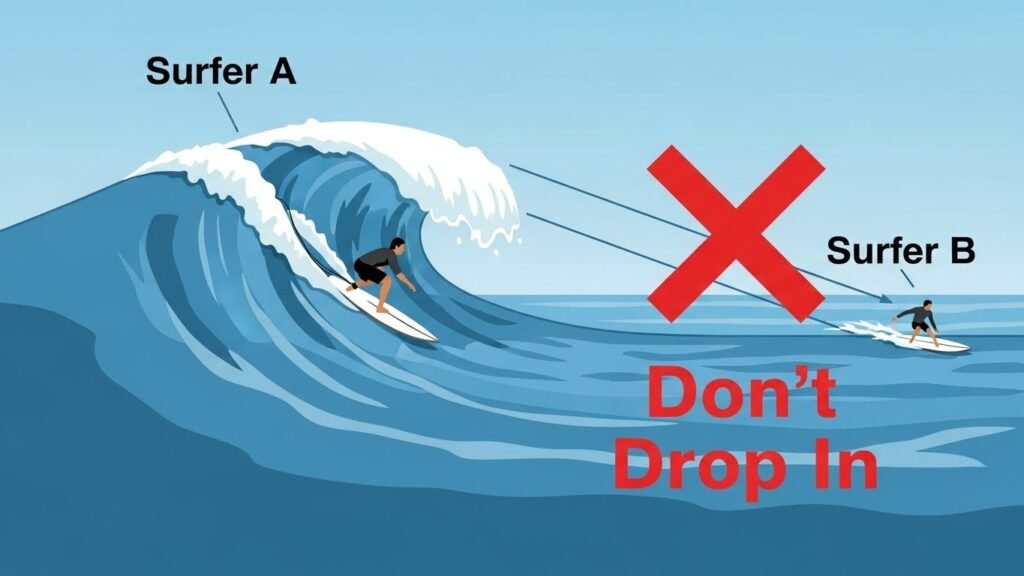
Don’t Drop In
This is the golden rule of surfing. “Dropping in” means catching a wave that another surfer is already riding. The surfer closest to the “peak” (the breaking part of the wave) has the right of way. If you see someone already up and riding on a wave coming toward you, do not paddle for it. Pull back and wait for the next one.
Don’t Snake
“Snaking” is paddling around another surfer to get closer to the peak and steal their right of way. It is considered very rude. Wait your turn in the lineup.
Hold on to Your Board
When a wave is crashing in front of you, do not ditch your board. A loose surfboard washing in with a wave is a dangerous projectile for anyone paddling behind you. Learn to “turtle roll” (flipping the board over while holding the rails) to get through waves.
Common Mistakes to Avoid
Learning surfing for beginners involves trial and error. Here are common pitfalls to watch out for.
The “Nose Dive”
If the nose of your board digs into the water and flips you over forward, you are lying too far forward on the board. Scoot back an inch or two toward the tail to lift the nose.
Stalling
If the wave passes underneath you and you don’t catch it, or if the board feels sluggish, you are likely lying too far back. This creates drag. Scoot forward slightly to level the board out.
The “Starfish”
When falling, try not to fall flat and rigid. Relax your body. Also, always cover your head with your arms when you surface after a wipeout. Your own board (or someone else’s) could be flying nearby.

Conclusion: Embrace the Journey
Surfing is a journey that never truly ends. Even professional surfers are constantly learning and adapting to the ocean’s changing moods. Do not get discouraged if your first few sessions are difficult. Every surfer, from the local legend to the world champion, started exactly where you are right now: on a foam board in the whitewater, learning to find their balance.
The key to progress is consistency. Try to get in the water as often as possible. Watch how other surfers move, respect the locals, and most importantly, have fun. There is no feeling quite like the “stoke” of riding a wave, and once you catch it, you will likely be chasing it for the rest of your life.