Van Life by the Ocean: Tips for Your California Coastal Road Trip
The California coast is the spiritual home of the modern road trip. Stretching over 800 miles from the redwood forests of the north to the sun-drenched beaches of the south, Highway 1 offers some of the most dramatic ocean views on the planet. For many, the dream is to experience this beauty through the lens of “van life”—the freedom to wake up to the sound of crashing waves and have your home wherever you park your wheels.
However, the reality of van life by the ocean requires more than just a camera and a sense of adventure. With coastal travel surging in popularity, navigating the Golden State in a van requires understanding local laws, managing limited resources, and respecting the delicate coastal environment. Whether you are renting a vintage Westfalia for a week or moving into a converted Sprinter for a year, these seven essential tips will ensure your journey is smooth and sustainable.

1. Plan Your Parking (Legally)
One of the biggest misconceptions about California is that you can park your van anywhere for the night. In reality, California has some of the strictest overnight parking laws in the United States, especially in desirable coastal areas like Malibu, Santa Barbara, and Monterey.
Use Apps to Scout
Do not rely on “vibes” to find a spot. Use apps like iOverlander or Sekr to find verified campsites, rest areas, or stealth parking spots. These apps provide user-generated reviews that tell you whether a place is “van-friendly” or whether local police are prone to issuing tickets at 2:00 AM.
Book State Parks Early
If you want to stay at a “front-country” campsite right on the beach, such as Kirk Creek in Big Sur or El Capitán in Santa Barbara, you must book months in advance. The California State Parks reservation system usually opens six months out, and beach spots disappear within minutes.
2. Respect the “No Overnight Parking” Signs
It is tempting to ignore a sign if the view is perfect, but in California, coastal enforcement is no joke. Many towns have enacted “Oversized Vehicle Ordinances” specifically to prevent people from sleeping in vans on residential streets or beach lots.
Why It Matters
When van lifers ignore these signs, it creates tension with local communities and often leads to the closure of more spots. If a sign says “No Parking 10 PM to 6 AM,” believe it. Respecting local regulations is a key part of maintaining the freedom of van life by the ocean for everyone.
3. Manage Your Moisture and Salt
Living by the ocean means dealing with two constant elements: humidity and salt. The “marine layer” (California’s famous coastal fog) can roll in quickly, making everything inside your van damp.
Prevention is Key
- Ventilation: Always keep a roof vent or window cracked, even if it’s chilly. This prevents condensation from your breath and cooking from turning into mold.
- Salt Protection: Salt air is corrosive. If you have a bike rack, surfboards, or a ladder on the outside of your van, rinse them with fresh water whenever possible. Regularly check your van’s undercarriage and door seals for signs of rust.

4. Master the “Leave No Trace” Principles
The California coast is a fragile ecosystem. With millions of visitors each year, the impact of trash and human waste is a serious issue.
Pack It Out
Never leave trash behind, even if a bin is already overflowing. Take it with you until you find a proper disposal site.
Gray Water Awareness
Be mindful of where you drain your sink water. Avoid using harsh soaps and never dump gray water directly onto the sand or into storm drains that lead to the ocean. Use biodegradable soap and dump your tanks only at designated RV dump stations.
5. Be Prepared for No Signal
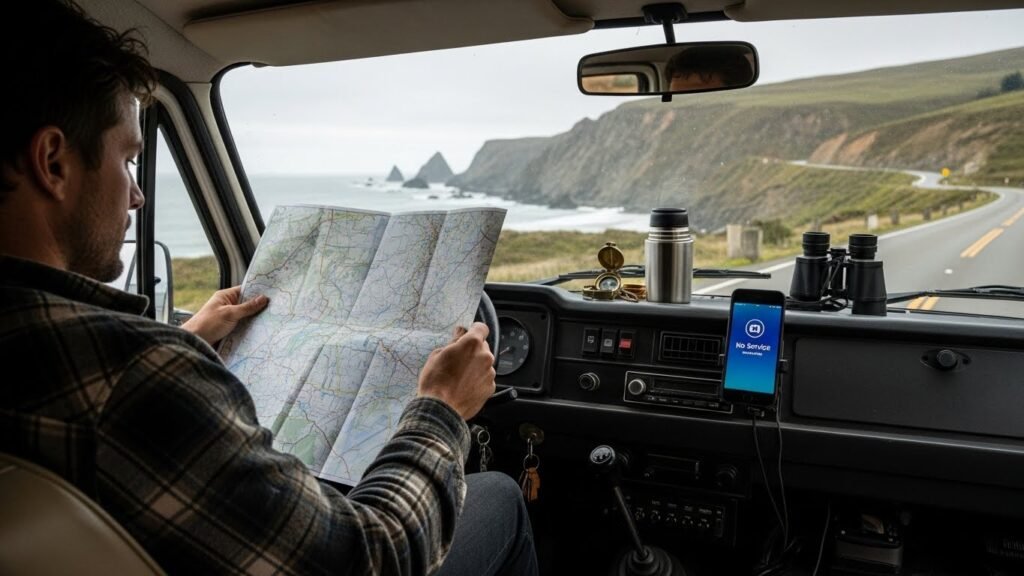
While California is the tech capital of the world, Highway 1 is notorious for massive “dead zones.” Large stretches of Big Sur and the North Coast have absolutely no cellular service.
Navigation Hacks
Download offline maps on Google Maps or use a dedicated GPS device. If you are working remotely, do not assume you can “hop on a Zoom call” from a cliffside pullout. Plan your work days around stops in larger towns like San Luis Obispo or Santa Cruz, where high-speed Wi-Fi is readily available at local cafes.
6. Embrace the “Slow” in Slow Travel
The Pacific Coast Highway is narrow, winding, and often subject to mudslides or construction. It is not a road for rushing.
Driving Etiquette
If you are driving a large van or an older RV, you will likely be slower than the local traffic. California law requires you to pull over at designated “turnouts” if there are five or more vehicles behind you. Pulling over not only prevents road rage but also gives you a chance to take in the view you’d otherwise miss while focusing on the hairpin turns.
7. Pack for Four Seasons in One Day
California coastal weather is famously fickle. You can be sweating in a t-shirt in Malibu at noon and shivering in a down jacket in San Francisco by 4:00 PM.
The Van Life Wardrobe
Layering is essential. Keep a “grab bag” near the front of the van with a windbreaker, a beanie, and a pair of sturdy shoes. The temperature can drop by 20 degrees the moment the sun dips below the horizon, and the damp ocean air makes the cold feel much sharper.

Common Mistakes to Avoid
- Leaving Food Out: In Northern California, you are in bear country. In Southern California, you are in coyote and seagull country. Leaving food outside your van invites wildlife encounters and a mess.
- Overstaying Your Welcome: Don’t stay in one “stealth” spot for more than one night. Move along to keep a low profile.
- Ignoring Tide Charts: If you park on a beach or near an estuary, check the tides. More than one van has been lost to a king tide in the middle of the night.
Conclusion
Van life by the ocean in California is a bucket-list experience that offers unparalleled access to some of the world’s most beautiful coastlines. While it requires more logistics than a standard hotel stay, the reward is the ability to live in harmony with the rhythm of the Pacific. By planning, respecting local laws, and treading lightly on the land, you can ensure that your coastal road trip is as beautiful in reality as it is in your imagination.