Chasing the Tide: Why Slow Travel is the Best Way to Experience Local Culture
In the age of social media, travel has transformed into a competitive sport. It is often measured in “countries counted,” stamps in a passport, and the number of famous landmarks captured in a 15-second video reel. We rush from the airport to the hotel, to the museum, to the famous restaurant, and back again, exhausting ourselves in a desperate bid to “see it all.” But in this frantic race to consume destinations, we often forget to actually experience them.
This is where slow travel comes in. It is not just a method of movement; it is a mindset. It is a rebellion against the checklist culture of modern tourism. By choosing to stay longer, move slower, and engage deeper, we unlock a side of the world that the weekend tourist never gets to see.
Slow travel is about connection rather than collection. It is about trading the blur of a bus window for the rhythm of a local neighborhood. If you have ever returned from a vacation feeling more tired than when you left, this guide is for you. Here is why slowing down is the ultimate travel hack for the modern explorer.

What Exactly is Slow Travel?
At its core, slow travel is the conscious decision to prioritize quality over quantity. Instead of visiting five countries in two weeks, a slow traveler might visit one region in two weeks. It emphasizes a connection to local people, cultures, food, and music. It relies on the idea that a trip is meant to educate and emotionally impact the traveler, and remains sustainable for local communities and the environment.
It borrows from the “Slow Food” movement, which originated in Italy as a protest against fast food. Just as fast food is convenient but lacks nutrition and soul, “fast travel” gives you the photo op but lacks the cultural nourishment.
The Economic Advantage: Why Staying Longer Costs Less
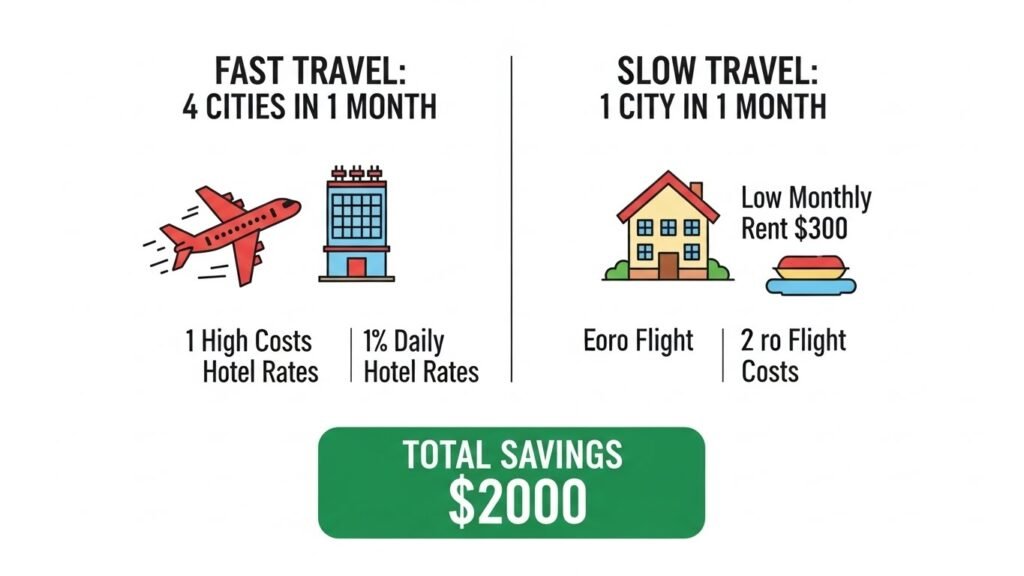
One of the biggest myths about travel is that staying longer is prohibitively expensive. In reality, moving fast is what drains your bank account.
The Cost of Movement
Every time you move, you pay. You pay for flights, taxis to the airport, visa fees, and the premium of short-term accommodation. A nightly rate at a hotel is significantly higher than the prorated nightly cost of a monthly rental.
The Monthly Discount
Platforms like Airbnb and local guesthouses often offer massive discounts—sometimes up to 50%—for stays of 28 days or longer. By embracing slow travel, you unlock these “local” rates. Furthermore, when you stay in an apartment with a kitchen, you save hundreds of dollars by cooking breakfast and simple dinners, rather than eating out three times a day.
Deepening the Cultural Connection
When you stay in a place for three days, you are a spectator. You see the facade that is put up for tourists. When you stay for three weeks, the facade fades, and you begin to see the reality. This is the heart of slow travel.
Becoming a Regular
There is a profound joy in becoming a “regular” at a local cafe or market stall. The first time you go, you are a customer. By the fifth time, you are a familiar face. By the tenth time, you might be learning the owner’s name and asking about their family. These micro-interactions are the threads that weave you into the fabric of a place.
Understanding the Rhythm
Every city has a rhythm. In Spain, the siesta is not just a nap; it is a cultural institution that dictates social life. In Bali, the daily offerings (Canang sari) set the spiritual tone of the morning. You cannot understand these rhythms on a weekend trip. You have to live through them enough times that they stop feeling “exotic” and start making sense.

The Environmental Impact
We cannot discuss modern travel without discussing the climate crisis. Aviation is a major contributor to global carbon emissions. The most effective way for a traveler to reduce their carbon footprint is simply to fly less.
Slow travel is inherently eco-friendly. By taking one long-haul flight to a region and then exploring that region by train, bus, or ferry, you drastically reduce your emissions compared to hopping on five short-haul flights. It encourages overland travel, which allows you to see the changing landscapes and reduces the pressure on over-touristed hubs.
How to Practice Slow Travel: Practical Steps
So, how do you actually do it? You don’t need to quit your job and travel for a year (though that helps). You can apply slow travel principles to a two-week vacation.
1. The “Base Camp” Strategy
Instead of booking four different hotels in four different cities, pick one central location as your “base camp.” Rent an apartment there for the full duration. Take day trips to nearby towns or attractions, but always return to your base. This eliminates the stress of packing and unpacking and allows you to build a routine.
2. Kill the Itinerary
Leave at least 50% of your schedule blank. If every hour is accounted for, you have no room for serendipity. You need time to get lost, to accept an unexpected dinner invitation, or to simply sit on a park bench and people-watch for two hours.
- Pro Tip: Plan one major activity for the morning and leave the afternoon completely open.
3. Use Local Transport
Taxis isolate you; public transport connects you. Riding the local bus or metro is one of the best ways to observe local life. It forces you to figure out the systems that locals use and often leads to interesting conversations.
Overcoming the “Fear of Missing Out” (FOMO)
The biggest barrier to slow travel is psychological. It is the nagging voice in your head that says, “You are in Italy; how can you not go to Venice, Florence, AND Rome?”
This is FOMO—the Fear of Missing Out. It is driven by the desire to validate our travels to others. We worry that if we don’t see the Colosseum, our trip to Italy “doesn’t count.”
The “JOMO” Shift
To embrace slow travel, you must shift to JOMO—the Joy of Missing Out. Accept that you cannot see everything. In fact, by trying to see everything, you end up seeing nothing but the back of other tourists’ heads.
- The Trade-off: You might miss the famous tower, but you discovered a hidden jazz club that isn’t in any guidebook. You missed the long queue, but you had a three-hour lunch with a local artist. These unique experiences are far more valuable than the generic ones shared by millions.

Digital Detox and Presence
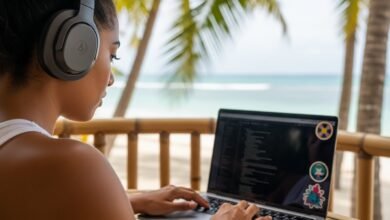
While slow travel is popular among digital nomads, there is a distinction between working remotely and being present. If you are in a beautiful destination but spend 12 hours a day staring at a screen, are you really there?
The disconnect to Reconnect
Part of slowing down is disconnecting from the constant feed of information from home.
- Turn off Notifications: Don’t let news from your home country distract you from where you are.
- Put the Camera Down: Challenge yourself to walk through a market without taking a single photo. Notice how your observation skills change when you aren’t looking for the perfect shot. You start to smell the spices, hear the haggling, and feel the humidity.
Conclusion: The Art of lingering
Ultimately, slow travel is an act of patience. It is the confidence to sit still in a world that tells you to keep moving. It allows the dust to settle so you can see clearly.
When you look back on your travels years from now, you won’t remember the rush to catch the 6 AM flight or the stress of the packed itinerary. You will remember the feeling of the sun on your face as you sat in that small cafe for hours, watching the world go by. You will remember the friends you made because you stayed long enough to say hello twice.
So, for your next journey, do less. Stay longer. Breathe deeper. Chase the tide, not the checklist.